


I test wireless earbuds for a living and these are my top 5 picks for all budgets
For some scenarios (i.e., diet recommendation), recommended items could involve groups of users rather than individual users (e.g., recommend a menu for a Christmas party). The current literature shows a limited number of studies on food recommender systems for groups. Group recommender systems usually attach the requirements/preferences of different users into group recommendation.
Key findings and model behavior
But the key is choosing the right exercises, and modifying them based on your body structure, your experience level, and your goals. Pinakin Ariwala has over 20 years of experience in AI/ML, data engineering, and software development. He has led AI and machine learning projects across industries, including agriculture, finance, and healthcare, and has been featured on the Clutch Leaders Matrix podcast discussing real-world AI/ML applications. Healthcare platforms recommend wellness plans, while SaaS tools nudge feature adoption. These industries leverage recommendation engines to drive personalization, engagement, and business growth. At Maruti Techlabs, our machine learning experts are well-versed with techniques like deep learning, supervised learning, unsupervised learning, reinforcement learning, etc.
- Recommender systems have been integrated into online retailers, streaming services, and social networks to facilitate users’ item selection process (Felfernig and Gula 2006; Tran et al. 2018).
- In terms of classification, the proposed model also outperforms others in risk group prediction accuracy, achieving 84.1% compared to 81.2% by28and 80.5% by27.
- The most common evaluation method applied in the aforementioned recommendation approaches is offline evaluation (Trattner et al. 2018), estimating the prediction quality of a recommendation approach using existing data sets.
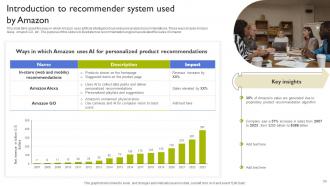
- 80% of consumers are more likely to buy from a brand that offers a personalized experience (Epsilon).
- While potentially more resource-intensive to develop, custom solutions can provide a significant competitive advantage through highly personalized and optimized recommendations.
- Machine learning provides an automated process to deliver customized service to users.
1 Constructing user profiles
More specifically, a variational autoencoder network processes the input, which is a vector that contains individual information (e.g., weight, height, age, etc.). The produced feature representation lies in a latent space, in which the input information can be modelled in an optimal way and capture meaningful and informative features about the user’s dietary requirements. Subsequently, a recurrent neural network is utilized to generate sequences of meals and construct the weekly meal plan. At the last stage, the generated meal plans are fed to an optimizer that adjusts the meal quantities to ensure that the energy and nutrients align with the user’s requirements and a final weekly meal plan is formulated.
Creating Personalized Product Content
Besides, it should be capable of evaluating the robustness to false information and the ability to consider potential health risks based on various dimensions (e.g., age, culture, ethnicity, etc.). Moreover, long-term behavioral effects must also be investigated in-situ evaluation to address the complexity of health and health behaviors (Schäfer et al. 2017). Start by gathering data on user interactions, preferences, and behaviors on your eCommerce store or platform. This data is crucial for understanding what site visitors like and how they interact with different products.
Weight Loss
In recent years, major advances fitness app recommendations in artificial intelligence (AI) have led to the development of powerful AI systems for use in the field of nutrition in order to enhance personalized dietary recommendations and improve overall health and well-being. However, the lack of guidelines from nutritional experts has raised questions on the accuracy and trustworthiness of the nutritional advice provided by such AI systems. Coupled with the ability of ChatGPT to provide an unparalleled pool of meals from various cuisines, the proposed method can achieve increased meal variety, accuracy and generalization capabilities. A sample daily meal plan, with 2043 kcal Calories, 85.11g of Protein, 279.25g of Carbohydrates, 65.47g of Fat and 13.16g of SFA, generated by the proposed nutrition recommendation system can be found in Table 10.
Evaluation metrics and Cross-Validation approach
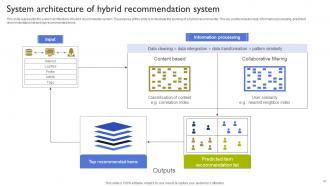
The collaborative filtering method is based on collecting and analyzing information based on behaviors, activities, or user preferences and predicting what they will like based on the similarity with other users. The prediction is done using various predictive maintenance machine learning techniques. This blog explores how recommendation engines actually work, from the algorithms powering them to the data they leverage. It also highlights practical applications in industries like e-commerce, entertainment, and finance, while uncovering future trends that will define their role in driving customer engagement, satisfaction, and long-term business growth. In HRS, sometimes, end-users could not be differentiated from potential attackers, which causes a degradation of trust in the objectivity and accuracy of the system (Valdez et al. 2016). To ensure secure HRS for users, future studies should model potential attacks and investigate the impacts of such attacks on recommendation algorithms (Mobasher et al. 2007).
How to pick your weights and reps
During the data preprocessing stage, selected features undergo imputation, encoding, and normalization. Feature engineering follows, where additional variables such as MET-based activity indices and waist-to-height ratio are derived. 8, we consider a parameter D that is used to increase or decrease the target energy intake and assist users with too small or too high BMI achieve the goal of gaining or losing weight. The goal of the energy intake loss is to guide the proposed AI-based diet recommendation method towards suggesting accurate meal plans that satisfy a user’s energy requirements. 6, 7 ensure that the computed meal plans are of high accuracy and comply with the nutritional and energy intake guidelines.
Sign up to receive content, exclusive offers, and much more from NASM!
Although the current literature has shown many benefits of HRS to improve their health conditions, there still exist some gaps regarding developing and evaluating HRS that need to be bridged. In the following, we discuss some research challenges that HRS face and corresponding solutions to tackle them. Deep integration allows for accurate tracking of recommendation performance alongside other key metrics. Watch the Dreamforce keynote to learn how teams spark conversations and respond in real time.
Products and services
Whether offering a timely playlist, product, or healthcare tip, these engines adapt to the moment. This capability drives higher engagement, immediate value delivery, and fosters customer loyalty through responsiveness and personalization. Real-time contextual recommendations analyze live user behavior such as location, device, and recent interactions—to deliver hyper-relevant suggestions instantly. From understanding subtle shopping preferences to mapping complex content consumption patterns, these advancements enable richer, more adaptive recommendation engines that evolve with each interaction. Ultimately, recommendation engines ensure businesses unlock greater ROI by aligning software use with organizational goals.
Healthcare: Personalized Treatment Plans
Privacy is referred to as the ability of HRS to preserve patients’ preferences and medical information. The leak of such information raises the doubts of patients and consequently decreases the willingness to share their sensitive medical data with HRS (Valdez et al. 2016). The most common approach to address the privacy concern is data encryption that provides data confidentiality while utilizing the user data to generate precise recommendations (Hoens et al. 2010). However, this method requires highly overhead computation- and communication-wise, which significantly decreases the performance of HRS (Verhaert et al. 2018). Although there exist some studies to improve the data encryption approach, some of them still face the issue concerning the low efficiency of the system (Hoens et al. 2010; Verhaert et al. 2018).


Deixe uma resposta